Every piece of Shoreline Stoneware begins long before the clay is rolled out or the kiln is switched on. It starts outdoors, with a walk across North Uist.
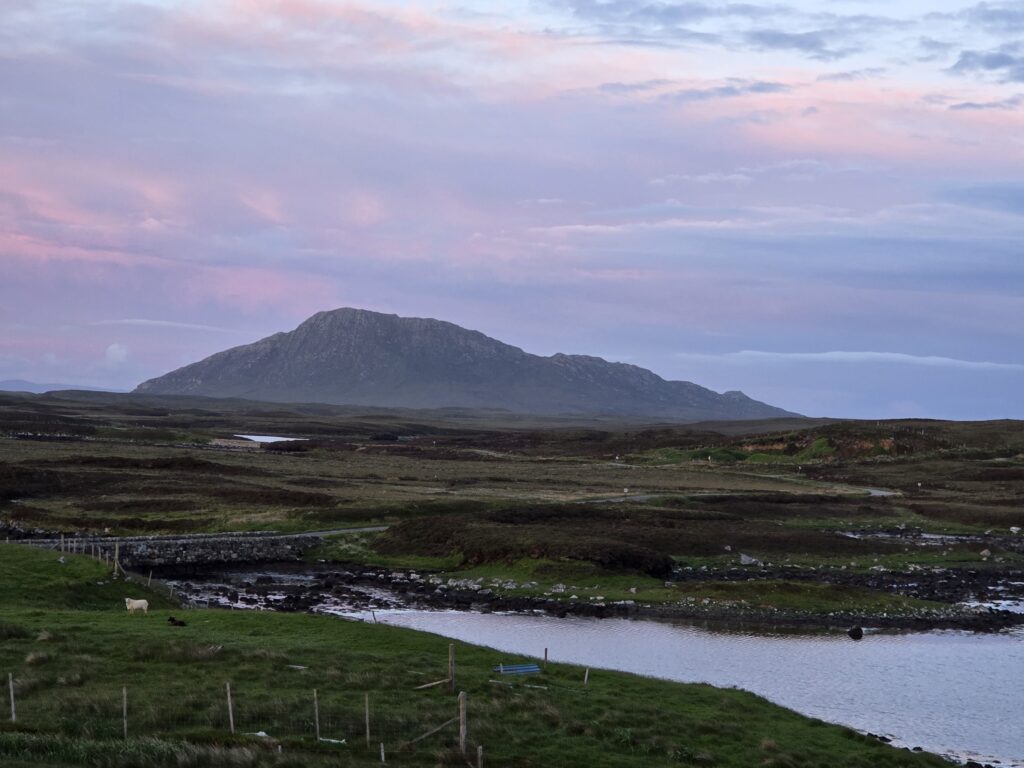
Whether it’s the sweeping beaches of the west coast, the freshwater lochs, or the changing silhouette of Eaval as the road winds through Locheport, the Hebridean landscape is woven into Louise Cook’s work from the very beginning.
“I enjoy the design evolving,” she says. “Sometimes I begin with a particular landscape in mind, but often the piece develops as I make it.”
That connection to place is what gives every bowl, vessel and sculpture its unmistakable sense of belonging.
Inspired by Land, Sea and Sky
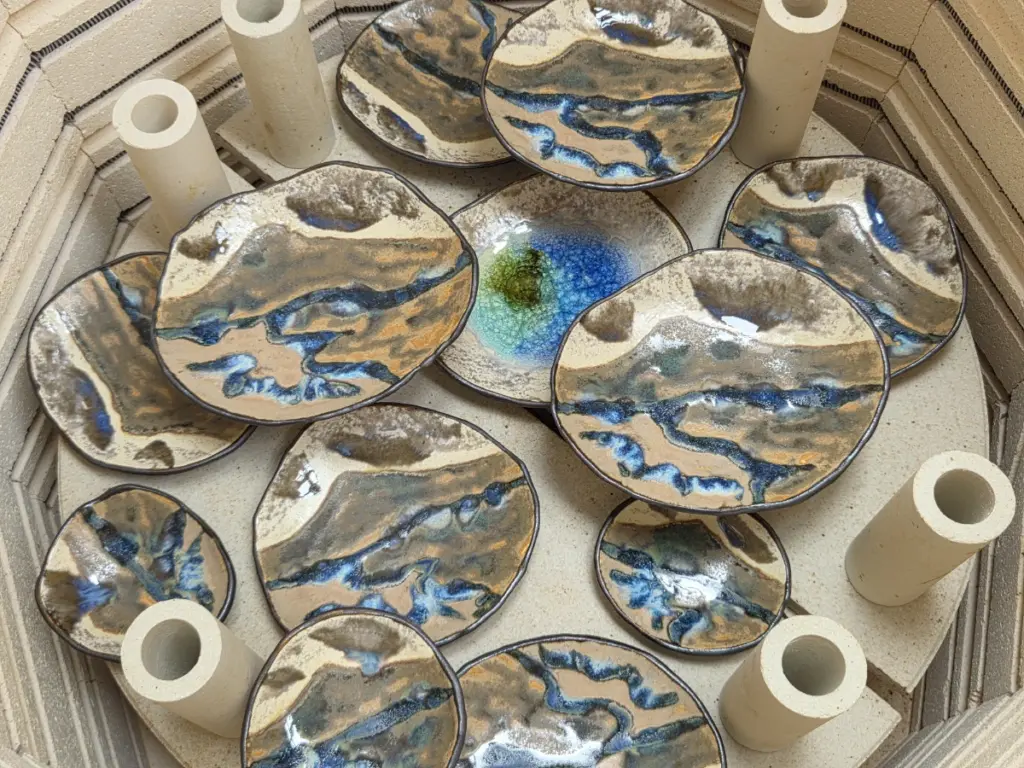
Many visitors immediately recognise the beaches in Louise’s work. Her beachscape collection captures the ebbing tide, reflections in shallow pools and the vast stretches of sand that appear when the Atlantic retreats.
Others are inspired by the quieter landscapes inland, where freshwater lochs, sea lochs and the hills of North Uist offer an entirely different palette of colours and textures.
One landmark appears time and again.
“Eaval from Locheport and from Baleshare where I see her from the beach. Her profile changes as you drive along Locheport.”
Like the landscape itself, no two pieces are ever quite the same.
Collecting the Island
Studio work often begins with another walk.
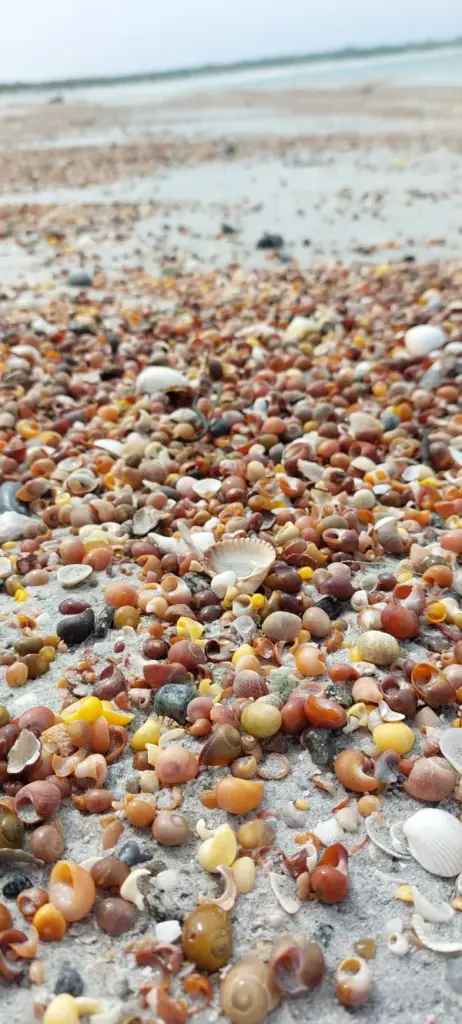
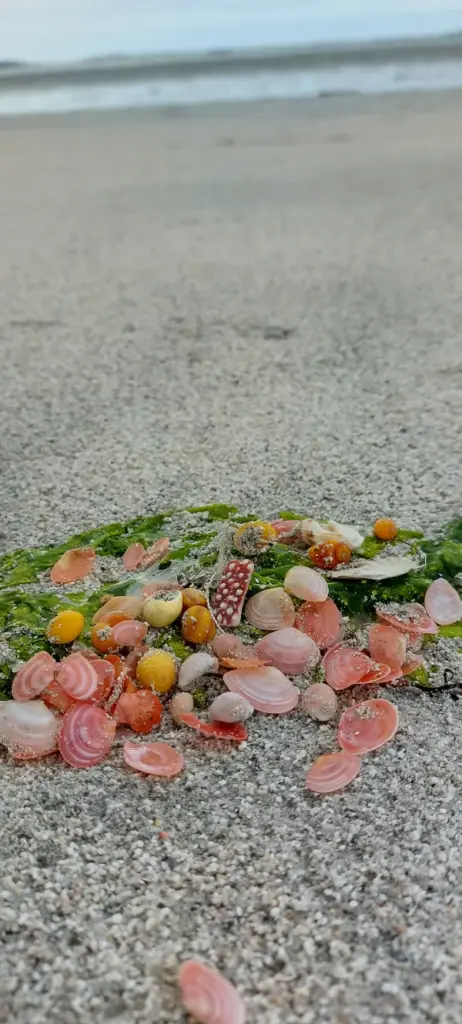
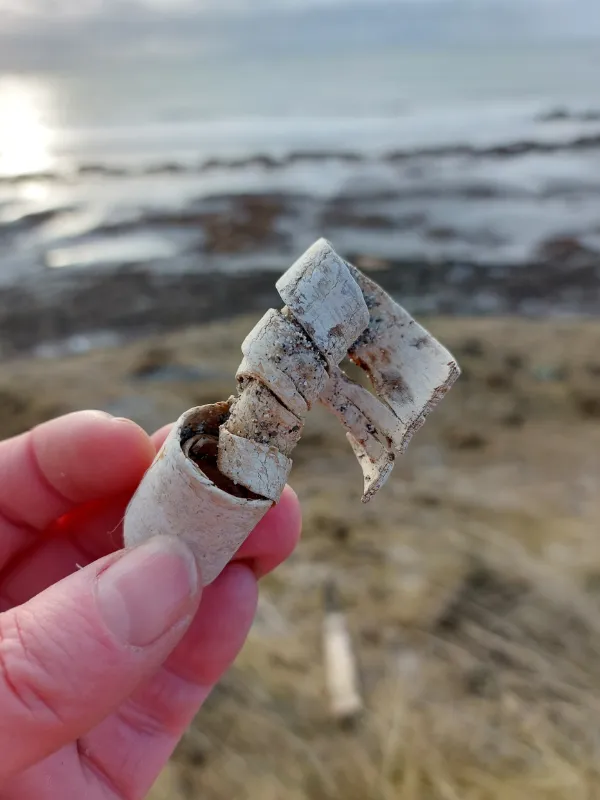
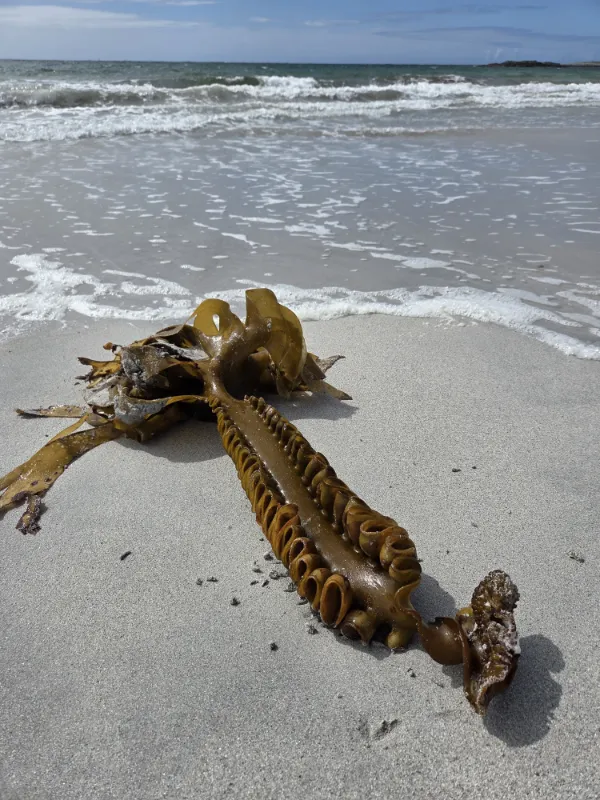
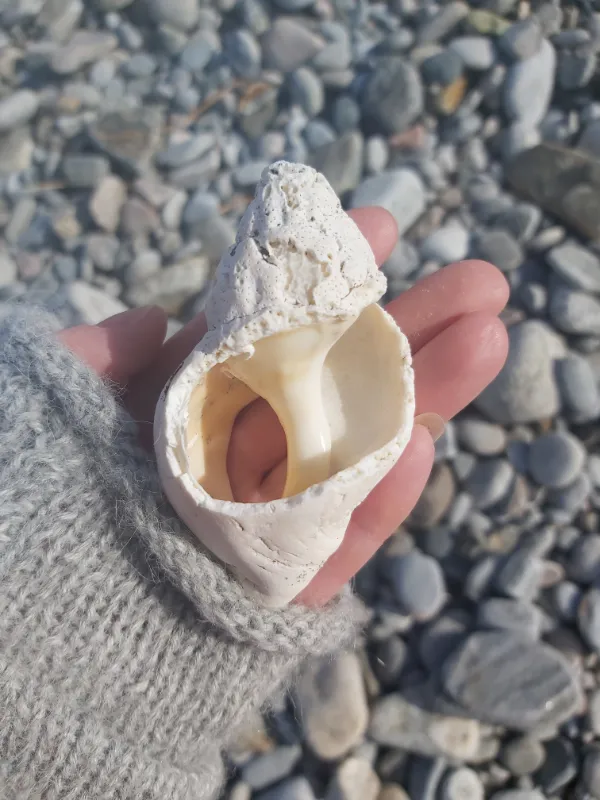
Louise regularly heads to local beaches to collect the natural treasures that later become part of her ceramics. Cowries, whelks, limpets, seaweed, scallop shells and mermaid’s purses all find their way back to the studio, ready to leave their mark on the clay.
One of her favourite textures comes from the humble whelk shell which Louise likens to the impression of ammonite fossils.
Most of these finds come from beaches around North Uist, although she admits that when she gets the chance for a day out, Prince Charlie’s Bay on Eriskay is always worth exploring.
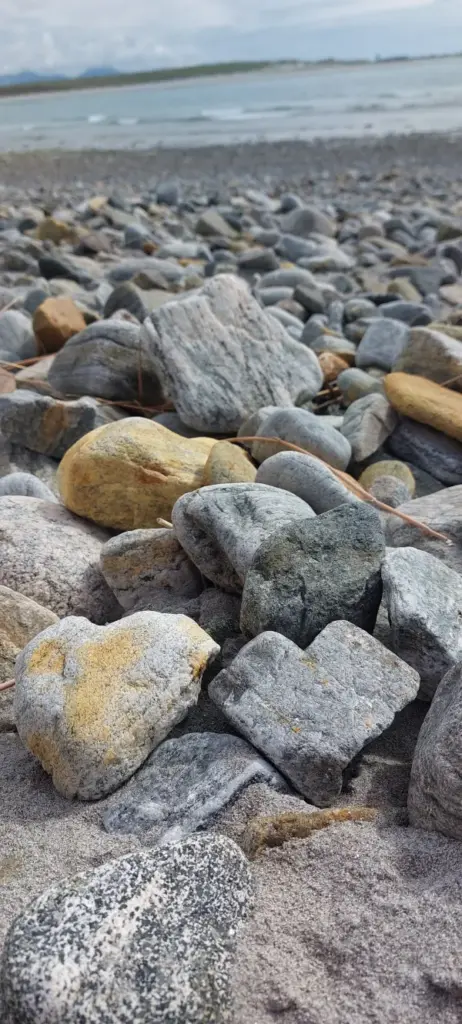
The glazes have equally deep local roots. The sediment used to create Shoreline Stoneware’s distinctive rich tones comes from Louise’s family croft, once worked by her grandmother. It is a material she has known since childhood.
“My connection comes from using it as a child and digging bucketfuls for my grandmother to use as a form of firebrick cement. It never really worked! But I enjoyed playing with it and making wee shapes.”
Today, that same croft sediment creates the rich iron and chestnut tones that have become a hallmark of her stoneware.
Building Every Piece by Hand
Nothing is mass produced.
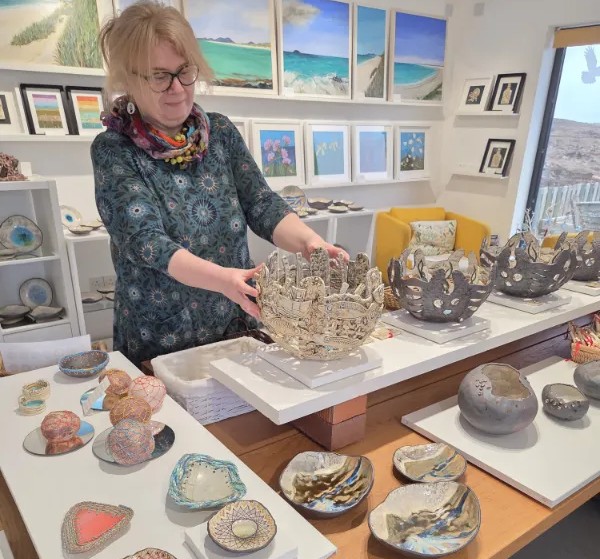
Louise works entirely by hand, using a combination of hand-building techniques to create each piece. She doesn’t use a potter’s wheel, instead making her own press moulds and texture tools to suit the forms she wants to achieve.
Many of these homemade tools also feature in the pottery classes she teaches.*
Timing is one of the biggest challenges. Large vessels are built over several days, allowing the clay to firm up gradually between stages. If the clay is worked while it’s too soft, it can lose its shape, but if it’s left too long and becomes too dry, it can crack or be difficult to shape.
Capturing Nature in Clay
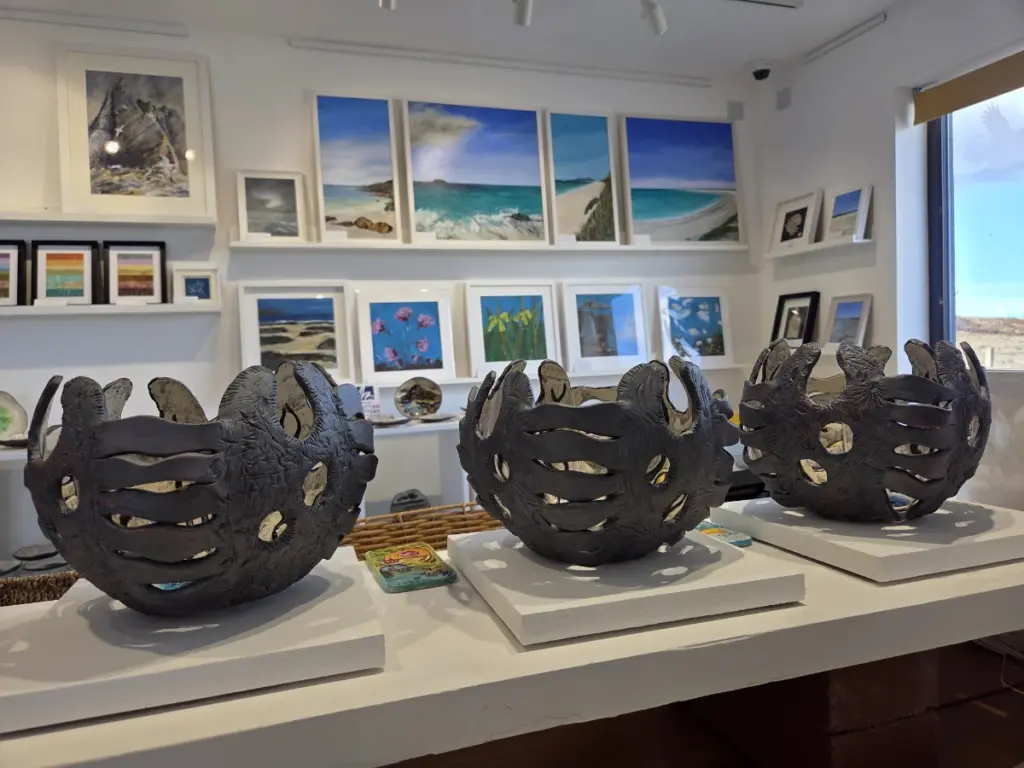
One of the defining characteristics of Shoreline Stoneware is its extraordinary surface texture.
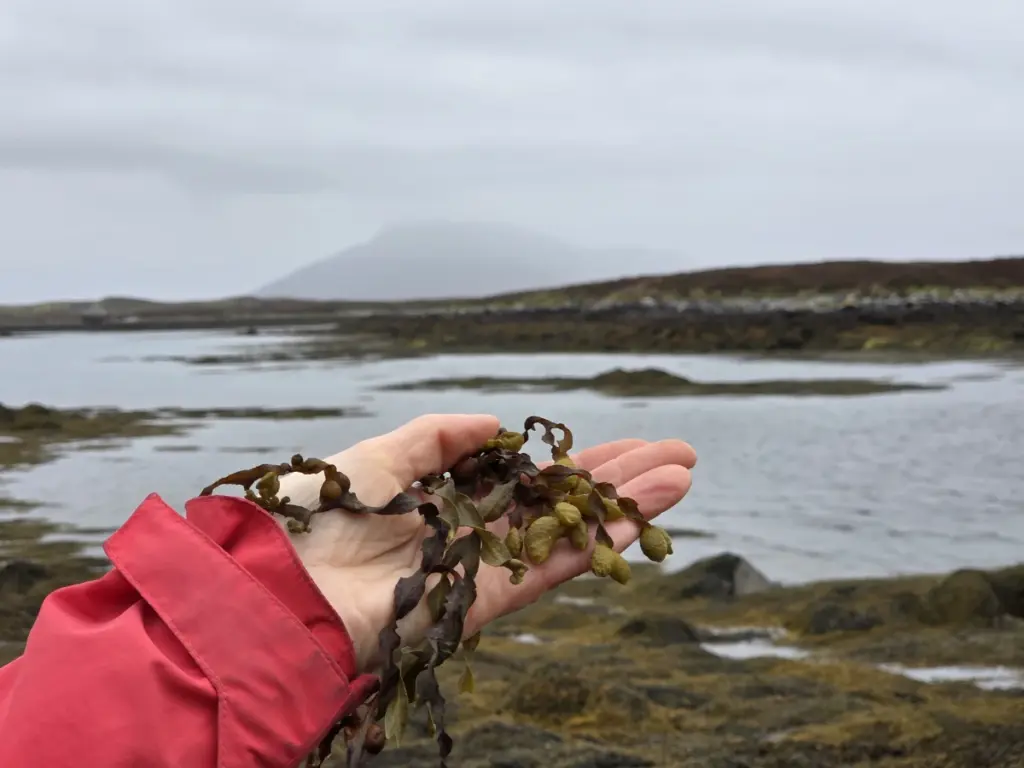
Some natural objects are pressed directly into the clay. Others, such as seaweed are too delicate and dry too quickly to survive repeated use, so Louise creates her own moulds from them instead.
She’s also developed rollers using impressions taken from rock surfaces, while some of her smallest tools have received a little creative engineering.
Cowries, for example, have had something of a Blue Peter-style makeover, with hot glue and a kebab stick added to make them easier to handle despite their tiny size.
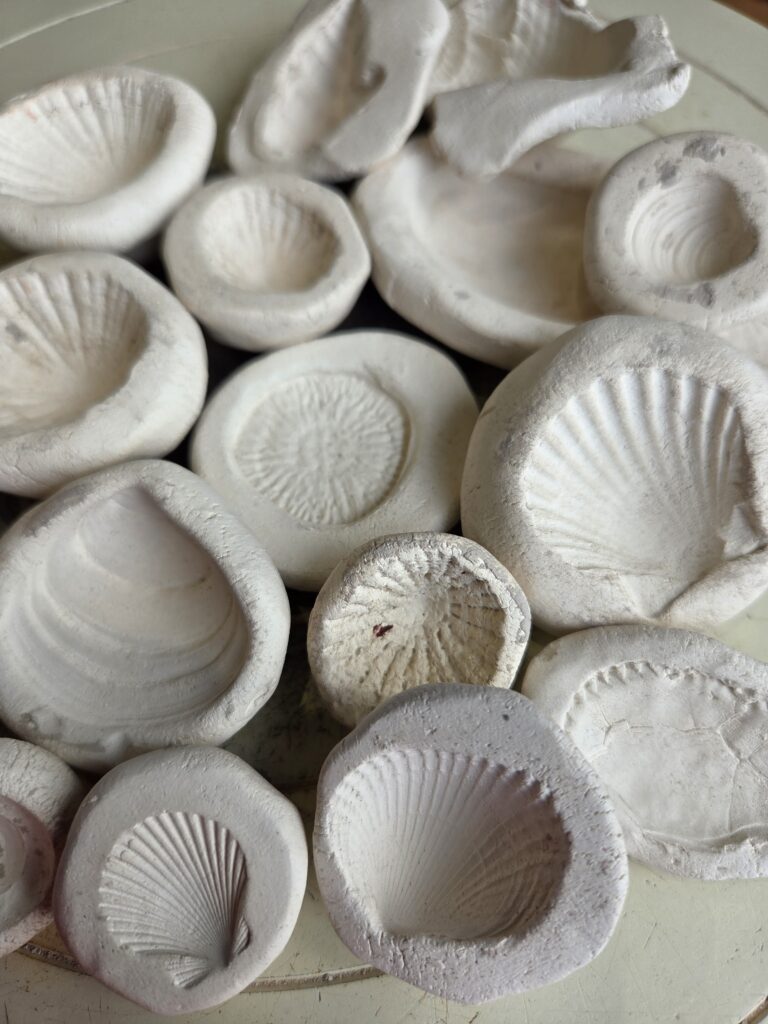
These tiny innovations allow Louise to reproduce intricate textures while still keeping every finished piece unique.
Patience Before the Fire
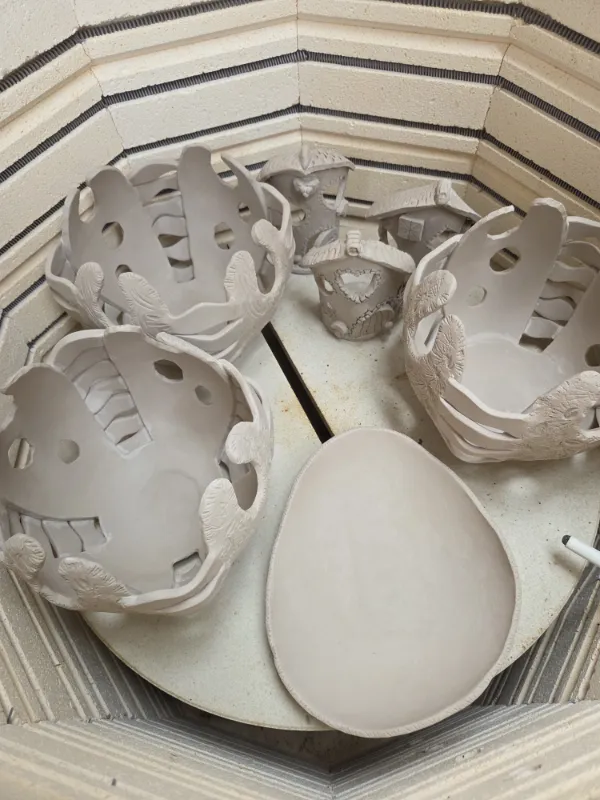
Before any firing begins, every piece must dry slowly and evenly.
This stage can take anywhere from several days to a week, depending on the size of the work. To reduce the risk of cracking, Louise carefully controls the drying process by loosely covering pieces with plastic or cling film, allowing moisture to escape gradually.
Only when the clay has reached exactly the right stage is it ready for its first firing.
The First Kiln Firing
Every piece is first bisque fired to around 1040°C.
At this stage, the clay becomes hard enough to handle while remaining porous enough to absorb glaze. Because no glaze has yet been applied, pieces can be stacked closely together inside the kiln without sticking.
It is only after this firing that the distinctive Shoreline Stoneware finishes begin to emerge.
Natural Glazes and Recycled Glass
The glazes are one of the most distinctive aspects of Louise’s work.
Over many years she has experimented with local sediments, carrying out countless test firings to discover how the natural materials respond to high temperatures.
“It can be very badly behaved! It took a lot of testing, but now I’m happy with the finish that I have.”
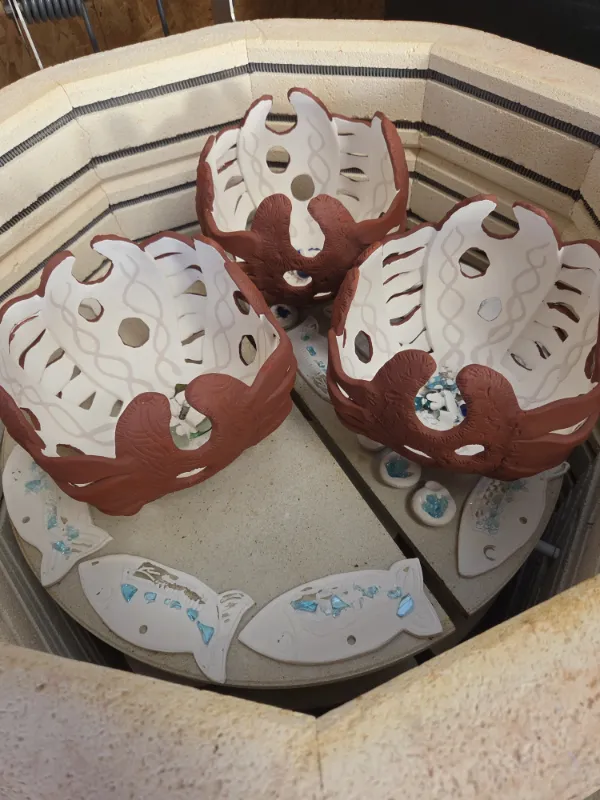
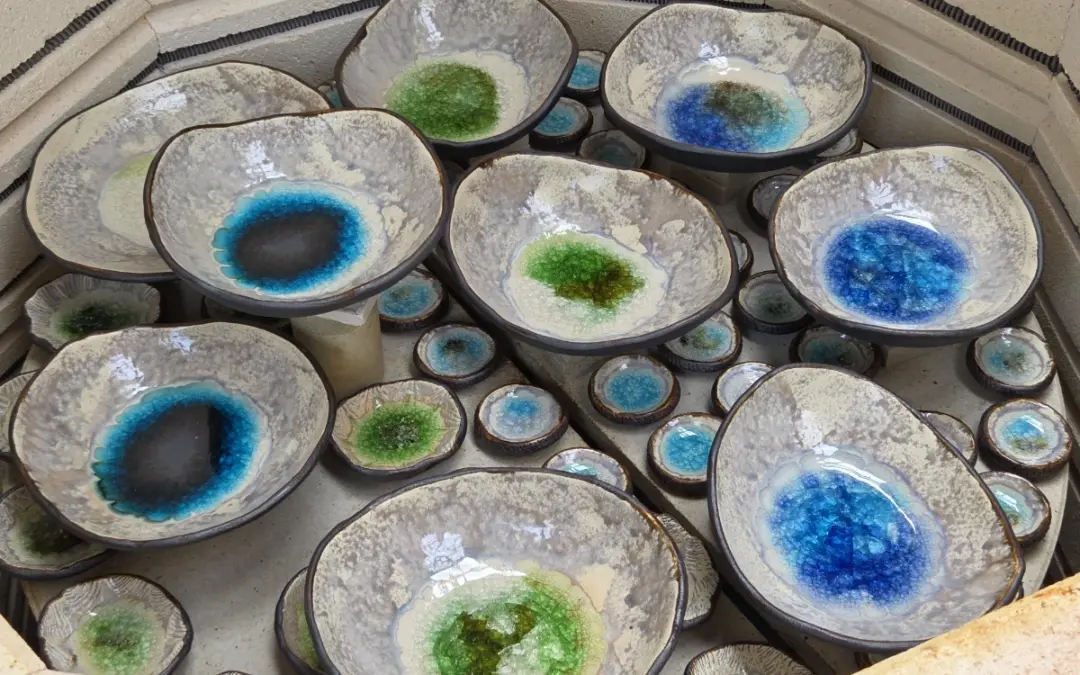
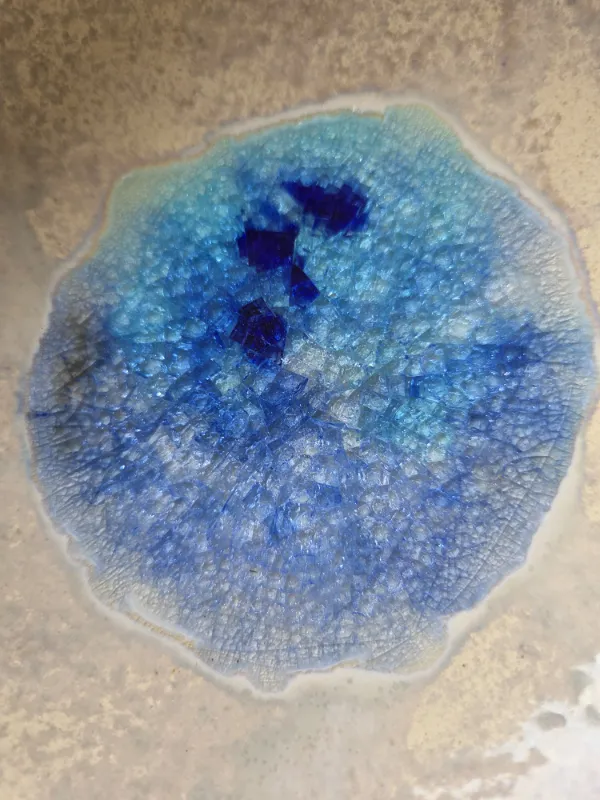
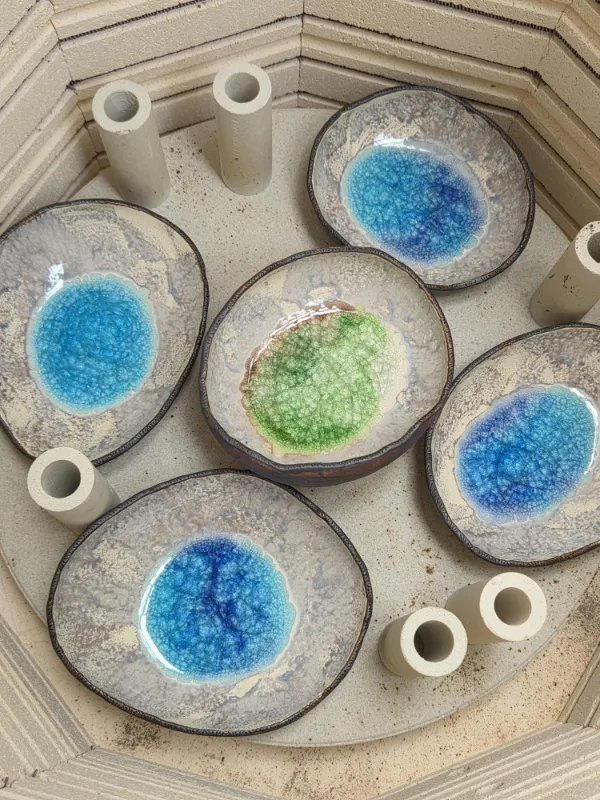
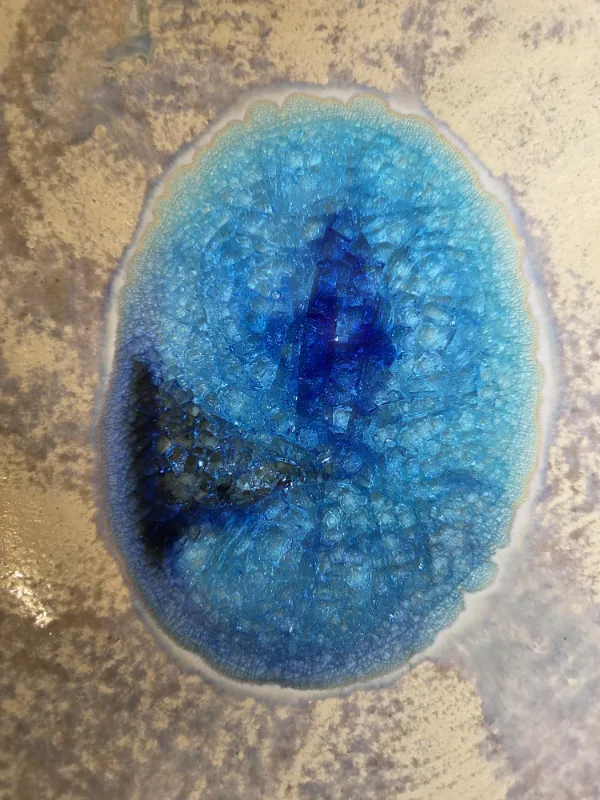
Selected pieces also incorporate recycled glass, added after glazing before the final firing. Old Bombay Sapphire bottles, Harvey’s Bristol Cream bottles and Neal’s Yard bottles all find a second life in her work.
Rather than simply adding colour, the melted glass recreates something much more personal.
“I wanted to capture the effect of water and reflections. Greens feel like home in Locheport with the land and bracken reflected in the lochs. The blue and turquoise remind me of the west side and the sea.”
The Final Transformation
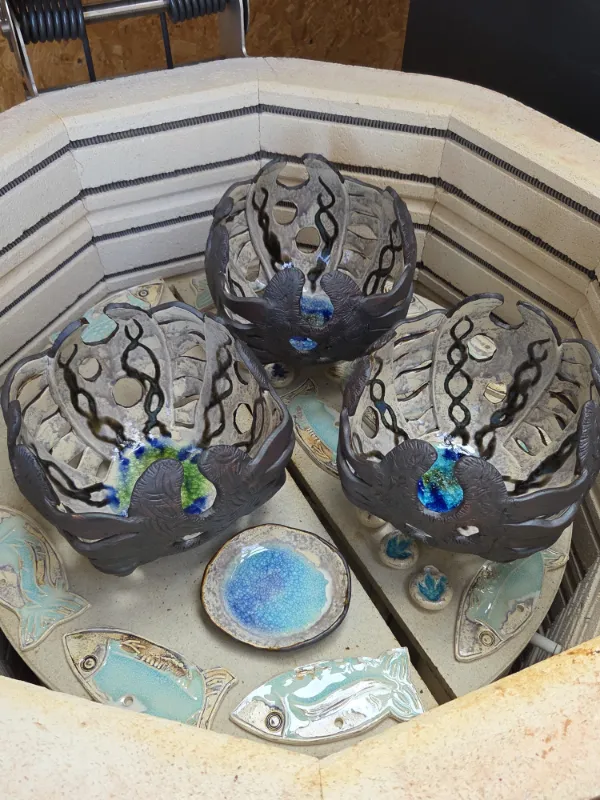
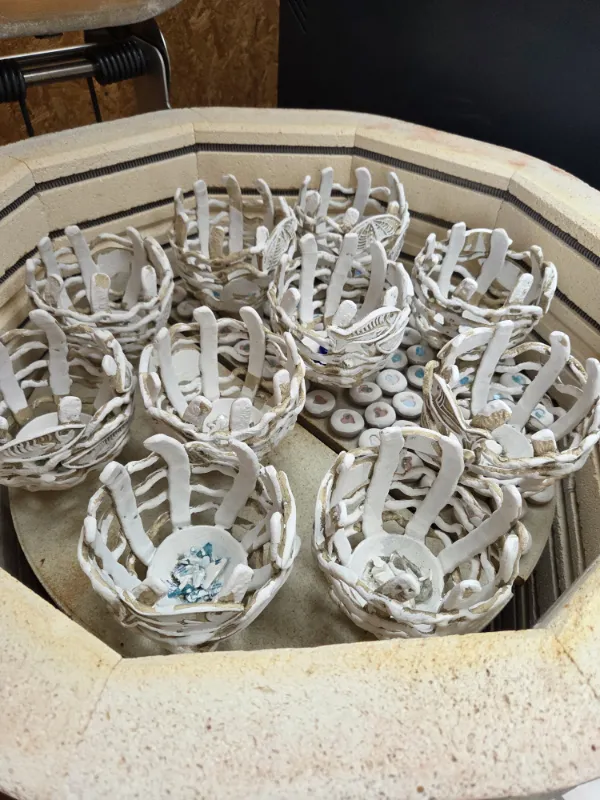
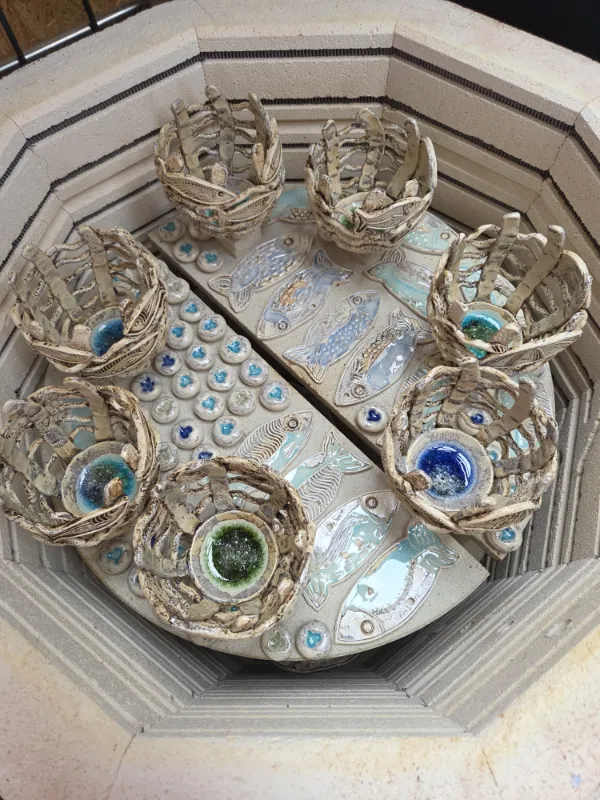
The final stoneware firing reaches approximately 1260°C and lasts around fifteen hours.
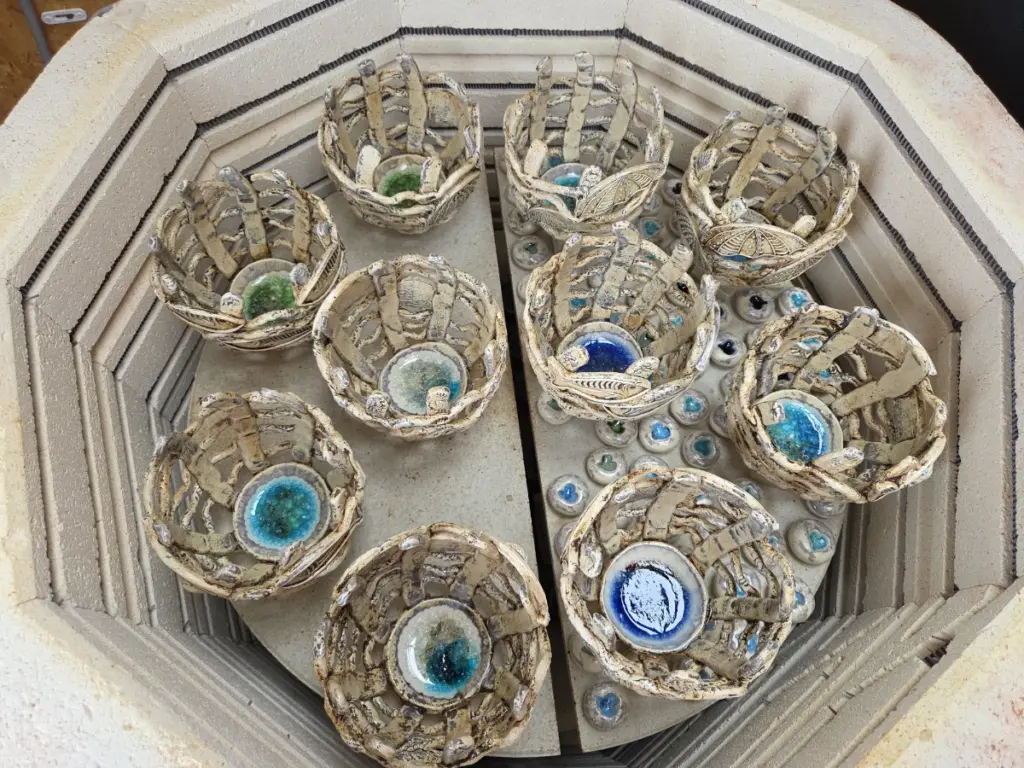
Inside the kiln, the clay vitrifies, the natural glazes melt into their rich glassy finish and the recycled glass softens into shimmering pools of colour.
This is where chemistry, craftsmanship and a little unpredictability come together.
The Joy of Opening the Kiln
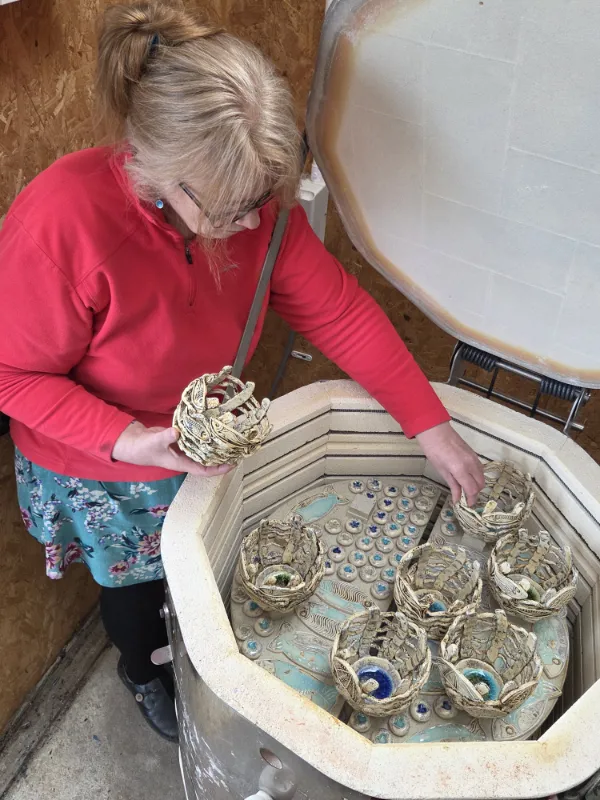
Even after years of experience, opening the kiln never loses its excitement.
“It’s the unexpected effects with the sea glass,” Louise says. “Some pieces were started several weeks before, so it’s wonderful finally seeing the end result.”
Sometimes the biggest surprises become favourite pieces, particularly when the varying density of the recycled glass creates effects she couldn’t have planned.
It’s this balance between careful craftsmanship and the unpredictability of fire that keeps every firing fresh.
More Than a Piece of Pottery
From collecting beach finds to testing natural sediments and waiting patiently through weeks of drying and firing, every Shoreline Stoneware piece carries a little of North Uist within it.
For Louise, the greatest reward comes when someone takes that connection home.
“I hope they remember their Uist holiday with joy and can still feel the sand between their toes.”
Perhaps that’s why these pieces resonate so strongly with visitors. They’re not simply handmade ceramics. They’re small reminders of island landscapes, Atlantic beaches and the quiet beauty of the Hebrides, captured forever in clay and glass.
*Join our mailing list to be the first to hear about our workshops and classes.